

PVC Rough Top Conveyor Belt
Custom anti-slip PVC rough top belts for inclined conveying, package handling, warehouse logistics, and replacement conveyor systems.
- Anti-slip rough top surface
- Custom width and belt length
- Endless or open belt supply
- Guides, cleats and joint options
What Is a PVC Rough Top Conveyor Belt?
A PVC rough top conveyor belt is a lightweight industrial belt with a textured PVC top cover. The rough surface increases friction between the belt and the conveyed goods, helping cartons, packages, bags, and light industrial products move more steadily on flat or inclined conveyors.
Compared with a smooth PVC conveyor belt, a rough top belt is better suited for applications where products may slip, slide, or lose position during conveying. Sunflow supplies custom PVC rough top conveyor belts as replacement belts for OEM conveyor systems, packaging lines, warehouse logistics lines, and light-duty industrial conveyors.

Rough Top vs Smooth PVC Conveyor Belt
Smooth PVC belts are suitable for general horizontal conveying, while PVC rough top conveyor belts are designed for applications where products need extra grip. If your cartons, packages, bags, or light industrial goods slip or move out of position, a rough top surface can help improve conveying stability.

Smooth PVC Conveyor Belt

Rough Top PVC Conveyor Belt
Conveying Requirement | Smooth PVC Belt | PVC Rough Top Belt |
General horizontal conveying | Suitable | Suitable |
Inclined conveying | May slip depending on angle and product | Better grip for inclined sections |
Carton and package handling | Suitable for stable flat conveying | Better when cartons move or slide |
Bagged goods conveying | May be unstable on smooth surface | Better anti-slip effect |
Product positioning | Lower surface friction | Higher friction helps reduce movement |
Easy surface cleaning | Easier to wipe | Depends on rough top pattern |
Need for stronger carrying support | Not the main solution | May still need cleats for steep angles |
Send Sunflow your belt photos, conveyor angle, pulley diameter, and conveyed product. We can help you compare smooth PVC, rough top PVC, cleated belt, or other surface patterns based on your working conditions.
PVC Rough Top Belt Patterns Available from Sunflow
Different rough top patterns provide different levels of grip, product stability, and conveying performance. Sunflow can help you choose the right PVC belt surface based on your product, conveyor angle, and working conditions.


屠宰场,海鲜处理-1-scaled.jpg)


屠宰场,海鲜处理-1-scaled.jpg)


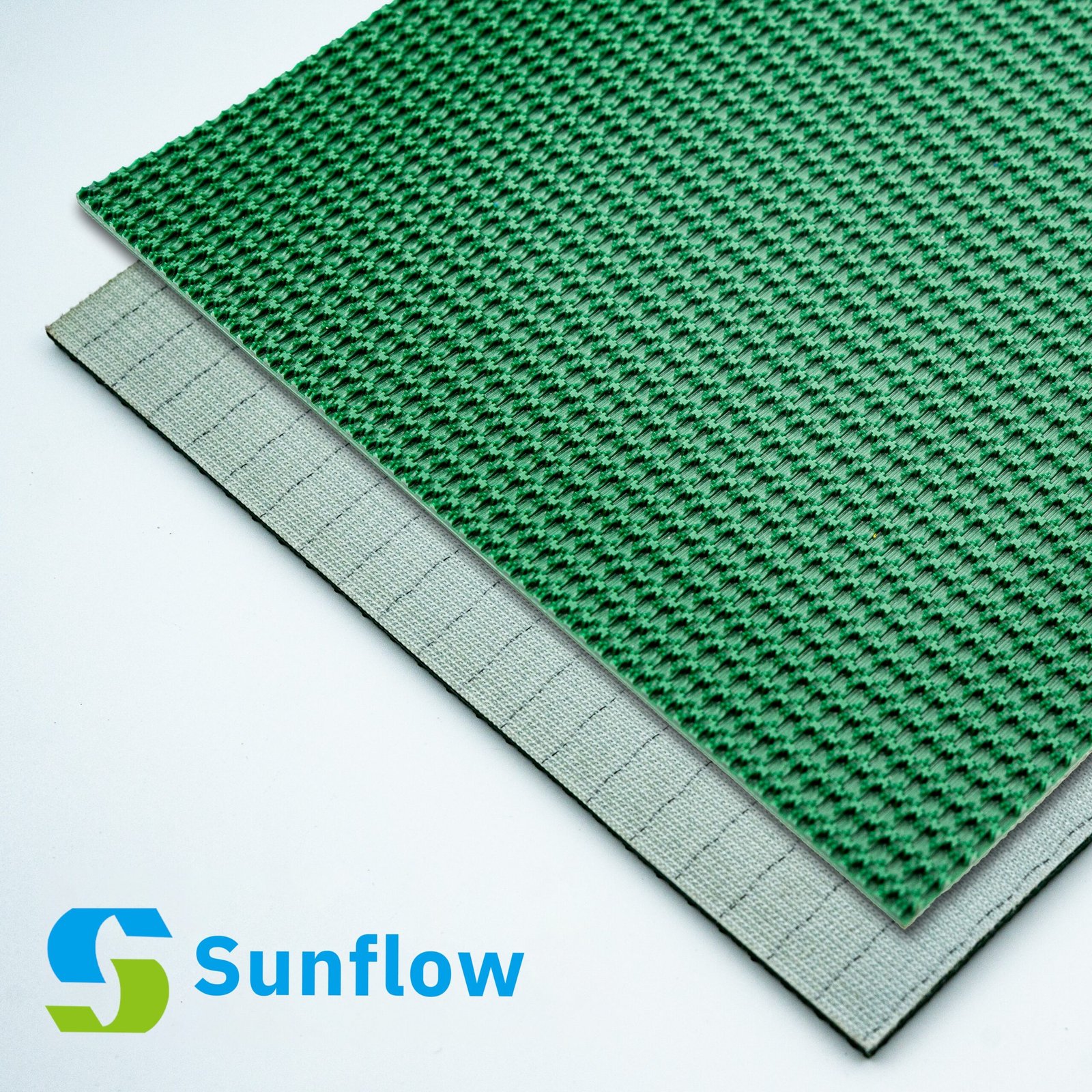
Send us your belt photo, conveyed product, conveyor angle, and pulley diameter. Sunflow will recommend a suitable PVC rough top belt pattern for your application.
Where PVC Rough Top Conveyor Belts Are Used
PVC rough top conveyor belts are commonly used when conveyed goods require better grip, more stable movement, or reduced slipping on flat, inclined, or transfer conveyor sections.
Inclined Conveyors with Slipping Products
When cartons, parcels, or packed goods slide back on an inclined conveyor, Sunflow can recommend a PVC rough top surface with higher grip. If the incline angle is too steep, we can also evaluate whether cleats or guides are needed instead of relying only on surface friction.
Carton & Package Transfer Lines
For packaging lines where cartons shift, rotate, or lose position during transfer, Sunflow can match the belt surface pattern to the carton weight, bottom material, conveyor speed, and transfer distance. This helps improve conveying stability without changing the whole conveyor system.
Bagged or Soft Package Conveying
Soft bags and flexible packages often have uneven contact with the belt surface. Sunflow can help select a rough top or wave rough top PVC belt to increase contact stability, especially when the product surface is slippery, dusty, or easy to deform during conveying.
Warehouse & Logistics Conveyors
In logistics and warehouse systems, replacement belts must match the existing conveyor size, pulley diameter, running direction, and joint requirements. Sunflow supplies PVC rough top belts cut and processed for parcel handling, transfer conveyors, and sorting-related conveying sections.
Light Industrial Production Lines
For assembly, packaging, and light manufacturing lines, Sunflow can customize PVC rough top belts according to product contact surface, required grip, belt thickness, and bottom structure. This is useful when standard smooth PVC belts cannot provide enough control during movement.
Replacement Belts for Existing Conveyors
If you are replacing an old rough top conveyor belt, Sunflow can work from your belt photos, belt width, total length, joint type, pulley diameter, and application details. We help match the surface pattern and belt structure so the new belt fits your existing conveyor line.
Send Sunflow your current belt photos, belt width, total length, pulley diameter, conveyor angle, and conveyed product. We will help you check the surface pattern, belt structure, and processing options for replacement or new conveyor use.
Custom PVC Rough Top Conveyor Belts for Your Conveyor System
A replacement conveyor belt must match more than the belt width and length. Sunflow customizes PVC rough top belts according to your conveyor structure, pulley diameter, running direction, surface grip requirement, joint method, and optional processing needs.
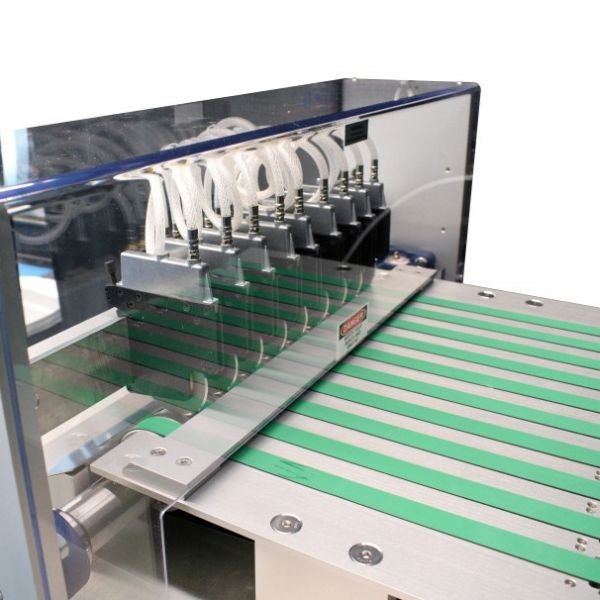
Precision Belt Cutting
Accurate cutting to specified width and length, ensuring compatibility with different conveyor systems and installation requirements.
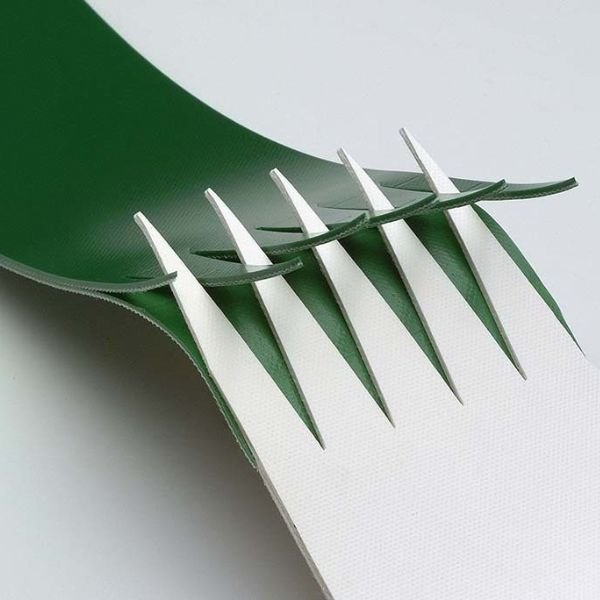
Endless Splicing
Hot vulcanized or mechanical jointing options available to create seamless belts for smooth and continuous operation.
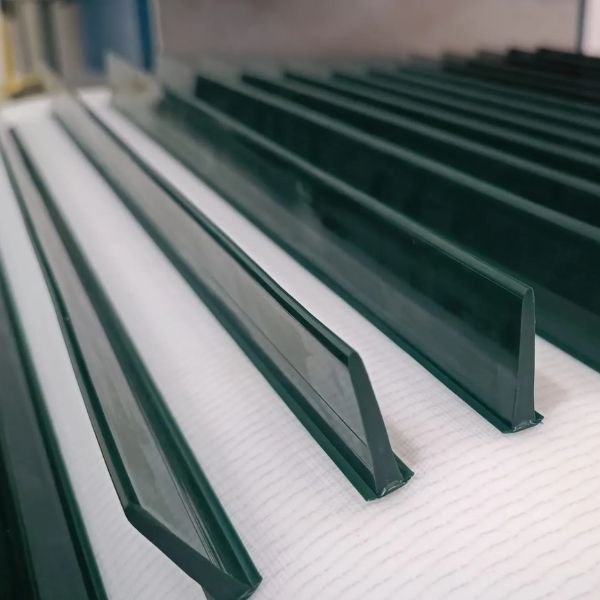
Cleat Welding
Custom cleats can be welded onto the belt surface for inclined conveying and material control applications.
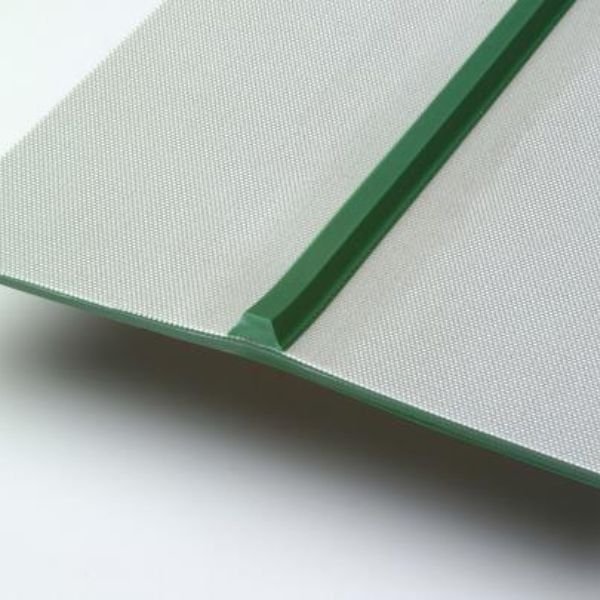
Guide & Tracking Profiles
Installation of guide strips to ensure precise tracking and stable belt operation during use.
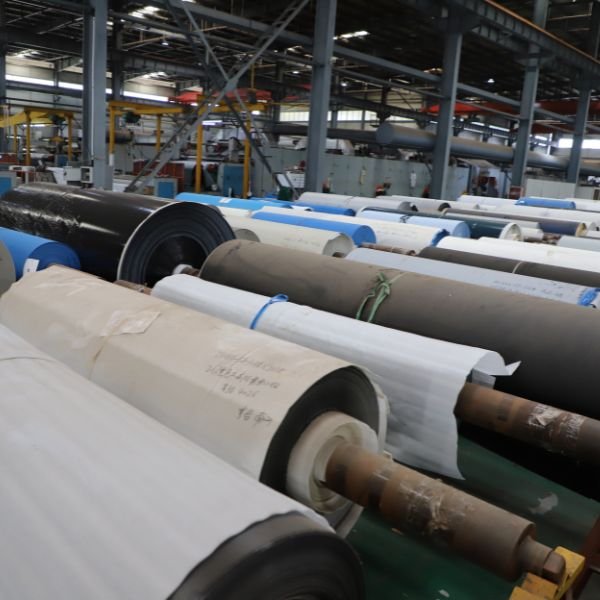
Additional Customization
Perforation, edge sealing, and special surface treatments are available based on application needs.
Please tell us your system specifications, and Sunflow will provide you with a customized conveyor belt solution.
PVC Rough Top Conveyor Belt Specifications
Sunflow supplies PVC rough top conveyor belts in different surface patterns, belt structures, thicknesses, colors, and processing options. Final specifications should be selected according to your conveyor design, pulley diameter, product weight, conveying angle, and working conditions.
Specification Item | Sunflow PVC Rough Top Conveyor Belt Options |
Belt Material | PVC |
Surface Pattern | Rough top, wave rough top, square rough top, square wave rough top |
Available Colors | Green, petrol green, black, grey, or selected according to belt type |
Belt Structure | 1-ply, 2-ply, 3-ply, or 4-ply |
Top Cover Thickness | Approx. 3.0 mm – 4.5 mm for most rough top PVC belt options |
Total Belt Thickness | Approx. 4.0 mm – 9.0 mm, depending on belt structure and pattern |
Surface Hardness | Approx. 60–75 Shore A, depending on belt type |
Working Temperature | -10°C to +80°C |
Breaking Load | Approx. ≥50 N/mm to ≥200 N/mm, depending on ply number and belt structure |
Working Load at 1% Elongation | Approx. ≥4 N/mm to ≥16 N/mm |
Minimum Pulley Diameter | Approx. 40 mm – 80 mm for most PVC rough top belt options |
Maximum Roll Width | Commonly 2000 mm – 3000 mm, depending on belt type |
Supply Form | Roll belt, open belt, or endless belt |
Joint Options | Hot-pressed joint, mechanical fastener, or selected according to conveyor installation |
Processing Options | Cutting, punching, guide welding, cleat welding, edge finishing |
Typical Applications | Inclined conveying, carton handling, package transfer, warehouse logistics, light industrial conveying, replacement belts |
- Belt width and total length
- Current belt photos or sample
- Pulley diameter
- Conveyor angle
- Conveyed product and weight
- Required joint type
- Need for guides, cleats, holes, or edge finishing
Sunflow will help you check the belt surface, structure, joint method, and processing options before quotation.
How to Select the Right PVC Rough Top Conveyor Belt
Choosing a PVC rough top belt is not only about the surface pattern. Sunflow checks the conveyed product, conveyor angle, pulley diameter, belt size, joint method, and processing needs before recommending a suitable belt structure.
Step 1:Confirm the Conveyed Product
Tell Sunflow what you are conveying, such as cartons, parcels, bags, packages, light industrial parts, or other products. Different product surfaces require different grip levels.
Step 2:Check the Conveyor Angle
For inclined conveying, the conveyor angle affects whether a rough top surface is enough or whether cleats, profiles, or other processing may be required.
Step 3:Measure Belt Width and Length
Provide the belt width and total length. If you are replacing an old belt, send the current belt size or photos so Sunflow can help check the replacement specification.
Step 4:Confirm Pulley Diameter
The pulley diameter affects belt flexibility and minimum pulley requirements. Sunflow uses this information to avoid selecting a belt that is too thick or too rigid for your conveyor.
Step 5:Choose Joint and Processing
Confirm whether you need an open belt, endless belt, hot-pressed joint, mechanical fastener, guides, cleats, punching, or edge finishing.
Why Choose Sunflow for PVC Rough Top Conveyor Belts
Sunflow helps buyers select and customize PVC rough top conveyor belts based on real conveyor conditions, not only product names. From surface pattern and belt structure to joint method and optional processing, we focus on making the replacement belt fit your conveyor line.
Application-Based Belt Selection
Sunflow does not recommend a PVC rough top belt only by material name. We check the conveyed product, conveyor angle, pulley diameter, belt width, belt length, and grip requirement before suggesting a suitable belt structure.
Multiple Rough Top Surface Options
Sunflow offers different PVC textured surfaces, including rough top, wave rough top, square rough top, and related anti-slip patterns, so buyers can match the surface to actual conveying problems.
Custom Processing for Replacement Belts
For replacement belt projects, Sunflow can process belts according to your current belt photos, installation method, joint requirement, guides, cleats, punching, or edge finishing needs.
Practical Support Before Quotation
Before quoting, Sunflow helps check whether the requested belt surface, thickness, pulley diameter, and joint method are suitable for your conveyor. This helps reduce wrong belt selection and installation mismatch.
Frequently Asked Questions About PVC Rough Top Conveyor Belt
Find answers to common questions about PVC rough top belt selection, replacement belt matching, joint options, and quotation requirements.
What is a PVC rough top conveyor belt used for?
A PVC rough top conveyor belt is used when conveyed products need more grip and stable movement. It is commonly selected for inclined conveying, carton handling, package transfer, bagged goods conveying, warehouse logistics, and light industrial conveyor systems.
What is the difference between a rough top PVC belt and a smooth PVC belt?
A smooth PVC belt is suitable for general flat conveying and easier surface cleaning. A rough top PVC belt has a textured carrying surface that increases friction, helping reduce slipping or product movement during inclined conveying, transfer sections, or package handling.
Can Sunflow make a replacement PVC rough top belt for my existing conveyor?
Yes. Sunflow can help match a replacement belt according to your current belt photos, belt width, total length, pulley diameter, conveyor angle, joint type, and conveyed product. This helps us recommend a suitable surface pattern, belt structure, and processing method.
Can a PVC rough top belt be supplied as an endless belt?
Yes. Sunflow can supply PVC rough top conveyor belts as open belts, roll belts, or endless belts according to your installation method and conveyor maintenance requirements. The suitable joint method should be confirmed based on belt type and conveyor structure.
Is a rough top belt enough for steep inclined conveying?
Not always. A rough top surface helps improve grip, but if the conveyor angle is too steep or the product is heavy, slippery, or unstable, cleats, profiles, guides, or other processing may be required. Sunflow can help evaluate this based on your conveyor angle and product details.
Can guides, cleats, holes, or edge finishing be added?
Yes. Depending on the conveyor design and application requirements, Sunflow can support processing options such as cutting, punching, guide welding, cleat welding, joint processing, and edge finishing.
What information should I provide for a quotation?
Please provide belt width, total length, quantity, current belt photos if available, pulley diameter, conveyor angle, conveyed product, product weight, required joint type, and whether guides, cleats, holes, or edge finishing are needed. These details help Sunflow recommend the correct PVC rough top belt before quoting.
Still not sure which belt is right for your system? Contact Sunflow for expert support and customized solutions.